Praise be to Allah, and may blessings and peace be upon the Messenger of Allah, his family, and all his companions. I bear witness that there is no god but Allah alone with no partner, and I bear witness that Muhammad is the servant and Messenger of Allah. I also bear witness that Jesus son of Mary is the servant and Messenger of Allah, His Word which He bestowed upon Mary, and a spirit from Him. May the best of prayers and peace be upon them both.
Thereafter,
This working paper addresses issues related to new Muslims: how to deal with them, the challenges they face, and tried-and-tested proposals for removing these obstacles. We ask Allah for sincerity in word and deed, and we ask Him, Exalted is He, to grant us and you success in what He loves and is pleased with.
First: What do I mean by “new Muslim”?
A new Muslim is someone who has believed in the oneness of Allah with his heart, in the six pillars of faith, pronounced the two testimonies of faith within the first five years, and begun learning the jurisprudence of worship (the pillars of Islam) such as ablution, prayer, supplication, and other acts of worship.
I have set the first five years, generally speaking, as the beginning phase for a new Muslim because these are critical years: they face various tests such as cultural shock, being abandoned by non-Muslim friends, possible financial hardship due to losing employment, or family conflicts resulting from changing their religion, and so on. During this period, the new Muslim may still have doubts about the religion and remnants of previous beliefs lingering in the heart. They may find it difficult to maintain prayer and Islamic acts of worship, and they usually have limited knowledge of Islam and are unable to respond to the doubts cast at them.
The repentant person who returns to Islam is also called a “new Muslim,” because they must study Islam again and relearn the prayer and other acts of worship.
As for someone who embraced Islam more than five years ago, I call them “guided to Islam” or “guided to the religion of Allah.” Within those five years there may be periods of wavering faith, or even a return to the former religion or oscillation between the former religion and Islam. If such periods are long—reaching up to six months—we restart counting the five years from their return to Islam. A repentant person who returns to the religion of Allah after apostasy (whether previously a new Muslim or born to a Muslim family) can be called a new Muslim, because they must reacquaint themselves with Islam and perform acts of worship anew.
This table clarifies my classifications of Muslims.
Classifications and Definitions
Classification
Who they are
Muslim
One born into a Muslim family
New Muslim
One who embraced Islam within the first five years
Guided to Islam
One who embraced Islam and may have passed five years since pronouncing the two testimonies
Repentant New Muslim
A person guided to Islam, or someone born into a Muslim family, who left the religion of Allah Almighty and then returned again
Second: Statistics on the numbers of those guided to Islam
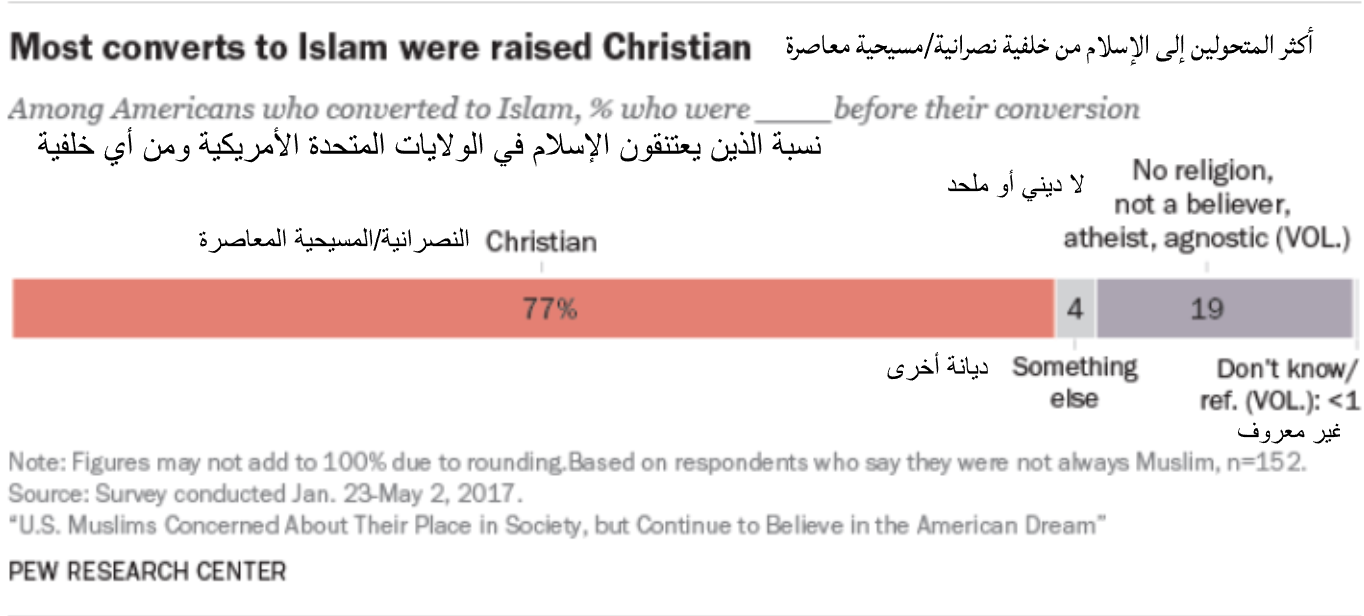
Statistics have shown us that the number of new Muslims is increasing. In 2012, more than five thousand people in Britain embraced Islam, and in the United States thousands enter Islam annually—so what about the rest of the world? We find that more than seventy-five percent of these new Muslims in Western and Arab countries are women, while in poorer African countries more than eighty percent of new Muslims are men. It is noteworthy that most of those who entered Islam came from a contemporary Christian background. According to studies and statistics from the Pew Research Center, more than 22% of American Christians who leave their religion—six percent of them—enter Islam.
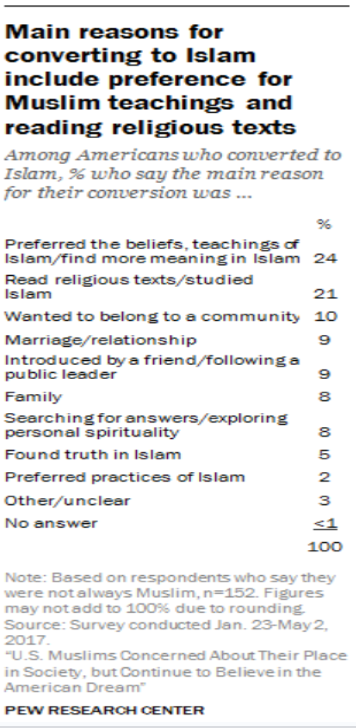
In fact, among those who entered Islam from a contemporary Christian background, 53% were from Protestant denominations and only 20% from Catholicism. The remaining 19% had no religion; a small percentage were from Orthodox Christianity, Buddhism, or other religions. There are several reasons for this: 24% of these new Muslims said the reason for embracing Islam was that Islamic beliefs have real meaning and are very logical to them; 21% converted after intensive reading and study of the Qur’an and Islamic texts; 10% wanted a sense of belonging to a close-knit community; 9% entered Islam for marriage; 9% embraced Islam after meeting a Muslim friend or well-known preacher; 8% converted after a family member became Muslim and they followed; 5% said they found the truth in Islam; and 2% preferred Islamic practices and acts of worship over others. The remaining 4% did not disclose their true reasons for embracing Islam.
In fact, among those who entered Islam from a contemporary Christian background, 53% were from Protestant denominations and only 20% from Catholicism. The remaining 19% had no religion; a small percentage were from Orthodox Christianity, Buddhism, or other religions. There are several reasons for this: 24% of these new Muslims said the reason for embracing Islam was that Islamic beliefs have real meaning and are very logical to them; 21% converted after intensive reading and study of the Qur’an and Islamic texts; 10% wanted a sense of belonging to a close-knit community; 9% entered Islam for marriage; 9% embraced Islam after meeting a Muslim friend or well-known preacher; 8% converted after a family member became Muslim and they followed; 5% said they found the truth in Islam; and 2% preferred Islamic practices and acts of worship over others. The remaining 4% did not disclose their true reasons for embracing Islam.
According to statistics that spread in 2014, those guided to Islam in Britain alone reached approximately 13% of the total Muslim population there—about 438,490 out of 3,373,000 Muslims.
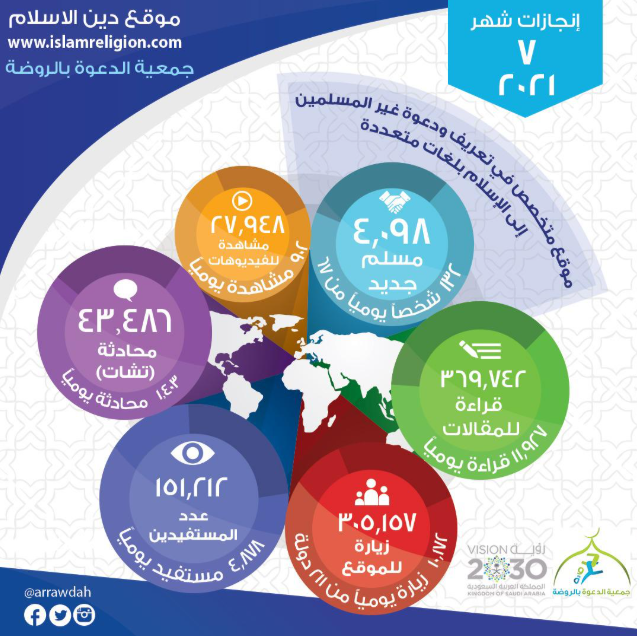
As for the spread of Islam in Africa, according to some staff at the IslamReligion.com website, more than 4,000 people embraced Islam last year through social media and remote communication, most of them from Kenya and Mozambique. It is expected that this growth rate will double by 2030.
Despite all this, between 75% and 80% of new Muslims leave Islam within the first five years in the United States, and most of them are women as well. The stories we see on television programs about learned converts and preachers are the elite and a minority compared to the larger number of those guided to Islam.
So what is the reason they leave Islam in the early years?
Third: Obstacles on the path of the new Muslim
There are several reasons that drive a new Muslim to leave the religion of Allah. Most do not abandon the monotheism they found to be the truth; rather, they stop praying, adhering to religious practice, and wearing Islamic attire. Some may say they left Islam while monotheism remains in their heart, and they cannot return to the polytheistic religion they followed before Islam. Among these reasons are:
1 -
Not learning Islam correctly: many new Muslims still have a stereotypical view of religion—that it is enough to attend Friday sermons, and to shape religion using pure rational logic without textual reference such as the Noble Qur’an and the Prophetic Sunnah. Often a new Muslim relies on their own internet searches, assuming any site can provide accurate information about Islam—ending up on Shi’a sites, “Qur’ani” sites, and others that do not present Islam accurately. A lack of structured study mixes everything up. Many new Muslims also retain remnants of prior convictions, trying to blend them with new beliefs that may contradict Islamic teachings—for example, reincarnation, the notion of a “son of God” (incarnation/union), or endorsing same-sex relations, etc. It is crucial that a new Muslim empty out all prior assumptions about Islam, abandon what they believed before, and start afresh to learn Islam and the prayer—understanding that Islam is creed (faith) and a practical way of life with continuous effort to draw closer to Allah Almighty.
2 -
Lack of follow-up from both sides: by “both sides” I mean the new Muslim and the Muslim engaging with them. Many people enter mosques and pronounce the testimonies after study and conviction; people embrace and warmly welcome them. But once the new Muslim leaves the mosque, we never see them again; no one follows up or knows anything about them. They may return to the mosque, but no one pays attention or interacts. I will propose a solution for this later, Allah willing. Likewise, the new Muslim may not realize they have a responsibility to learn and persevere, as noted earlier.
3 -
Severe pressure from the Muslim community: many new Muslim sisters I spoke with about the reasons for their apostasy said that community customs and traditions did not suit them. They felt that by embracing Islam they had adopted foreign customs and traditions, which changed them greatly; they could no longer stand themselves and feared losing their identity, feeling lost. Some may marry a Muslim who imposes a specific way of interacting with his family, or they become involved with groups that force a particular appearance and clothing style, which makes them change their view of Islam and decide to leave.
4 -
Bad marriages: unfortunately, many expatriate or immigrant men who marry new Muslim women distort the merciful and gentle image of Islam due to their poor and sometimes violent treatment—whether abuse, exploiting immigration documents/visas, stinginess, or generally harsh conduct. The new Muslim woman may not know her rights and finds no guidance before or after marriage on how to deal with a culturally unaccustomed husband who expects her to conform to the traditions of his society.
5 -
Loneliness and depression: this applies to new Muslims living far from Muslim communities in the West. Little interaction with Muslims and not attending mosques or study circles—which strengthen and support one another—weakens faith and allows a lax attitude toward religion and a return to pre-Islam habits.
6 -
Excessiveness/harsh strictness: some new Muslims become involved with very strict groups that force changes in appearance and thinking: specific clothing, jargon labeled “Islamic,” declaring others to be unbelievers, and even pressuring or roughing up the new Muslim for not following their ways, playing “halal/haram police.” This ultimately leads the new Muslim to give up and withdraw from religious commitment because the religion was presented too harshly.
7 -
Doubts and anti-Islam claims: some new Muslims interact with non-Muslims—out of zeal, to invite them to Islam—and face rejection and hostility, especially from close family and friends. They are mocked, sent anti-Islam websites, and videos by people whose main aim is to attack Islam. If the new Muslim lacks sufficient knowledge and firm creed, doubt, confusion, and panic may enter their heart. They may regret entering Islam too quickly and thus leave at the first opportunity without seeking satisfactory answers and the truth behind such claims.
8 -
Other individual reasons: depending on each new Muslim’s circumstances—psychological, financial, moral, coercion, etc. It is important to communicate with, support, and help them overcome their ordeal and try to bring them back to the truth.
Therefore we pose this question—with multiple layers of depth within it: How do we deal with new Muslims?
Fourth: Proposals to overcome these obstacles
The new Muslim is evidence of the greatness of Islam—its power over hearts and its ascendancy over all other religions. The one who enters Islam is like a newborn; Allah replaces their bad deeds with good ones. The soil of their heart is tilled, free of thorns and stones, ready for the seeds of faith that have begun to sprout and bud. Allah the Exalted says: “Except for those who repent, believe, and do righteous deeds, for them Allah will replace their evil deeds with good. And ever is Allah Forgiving, Merciful.” (Al-Furqan 25:70). Here are some proposals to remove the obstacles a new Muslim may face and ways to deal with them:
1.
Congratulating the new Muslim: This is very important and has a great effect on the new Muslim, especially when accompanied by visible joy, happiness, and even tears of joy. It profoundly impacts the heart and earns you a special place there. If we congratulate someone for business success or a newborn child, then congratulating them for the blessing of guidance to Islam is even more deserving. The Companions rejoiced at the Islam of ‘Umar (may Allah be pleased with them), and the people of the house proclaimed a takbeer that was heard by the people in the mosque; similarly with others who accepted Islam.
2. Welcoming them with excellence: The Prophet’s character (peace be upon him) in dealing with and welcoming them reached the pinnacle of tolerance and care. This is seen, for example, in the Islam of Khalid ibn al-Walid (may Allah be pleased with him). When Khalid, ‘Amr ibn al-‘As, and ‘Uthman ibn Abi Talhah arrived, Khalid said: “The Messenger of Allah was informed about us and he was delighted. I put on fine clothes and went to him. My brother met me and said: Hurry—he has been told of your coming, is pleased, and is waiting for you. We hastened until I appeared before him; he kept smiling at me until I stood before him. I greeted him as a prophet; he returned my greeting with a cheerful face. I said: I bear witness there is no god but Allah and that you are the Messenger of Allah. He said: ‘Come.’ Then he said: ‘Praise be to Allah who guided you. I used to see in you sound judgment, hoping it would only lead you to good.’ I said: O Messenger of Allah, I have opposed you in many battles—pray that Allah forgives me. He said: ‘Islam wipes out what came before it.’” Women are even more deserving of such gentleness and care.
Among the good ways of welcoming a new Muslim is to open the door of hope at their entry into Islam, as in the hadith of ‘Amr ibn al-‘As (may Allah be pleased with him): when Allah placed Islam in my heart, I went to the Prophet (peace be upon him) and said: Stretch out your hand that I may pledge allegiance. He stretched out his hand and I withdrew mine. He said: What is with you, ‘Amr? I said: I want to stipulate. He said: What do you stipulate? I said: That I be forgiven. He said: Do you not know, ‘Amr, that Islam demolishes what came before it, hijrah demolishes what came before it, and Hajj demolishes what came before it?
The new Muslim is often haunted by past sins, unaware of Allah’s vast pardon and grace.
From the two narrations we derive:
— Positivity in speech, congratulating them, and making them feel accepted and that we are proud to have them among us.
— Winning hearts with gifts: part of the Prophet’s method (peace be upon him) was to win over new Muslims with wealth and other means. A man would accept Islam and the Prophet would give him gifts to endear Islam to him; he would return to his people saying, “O my people, accept Islam, for Muhammad gives generously without fear of poverty.” We can give gifts to a new Muslim such as a translated Qur’an in their language, some pamphlets, Islamic clothing, a prayer rug, and other appropriate gifts.
— The caller to Islam should be keen to explain that Islam erases what came before it.
— Educate the new Muslim that, despite embracing Islam, personal problems may not disappear; we must cooperate to find solutions and provide necessary care.
3.
Affirming the new Muslim’s value in the community: They may have been respected among their people and friends before Islam, so this should not be neglected under the pretext that they are the beneficiary upon entering Islam. The Prophet’s method (peace be upon him) was to preserve the status of the new Muslim in society, and examples are many: leaders in Quraysh before Islam became leaders after embracing Islam.
4.
Respecting their feelings: Regardless of their place in their former society, a new Muslim needs appreciation. Entering Islam is not a small event; it is a total life change affecting them and those around them. The matter is heightened for those who held status before Islam. The Prophet (peace be upon him) accounted for this by “placing people in their proper ranks,” as seen in his statement on the day of conquest: “Whoever enters the house of Abu Sufyan is safe…”—an honoring and distinction among the nobles of Quraysh.
— In reality, many born Muslims place new Muslims either on too high or too low a pedestal. Often, whenever a born Muslim meets a convert—even if they converted decades ago—they greet them with exuberance and repeatedly ask for their conversion story and personal life details, which can be annoying, inflate the ego, and may lead a new Muslim to assume the role of preacher without sufficient knowledge. Conversely, some Muslims view the new Muslim as coming to the mosque only for financial help. We must strike a balance: they are like any other Muslims—some wealthy, some poor, some educated, some devout, some not. Many new Muslims adopt the environment they remain in for a long time.
— Note also that the new Muslims who appear on satellite channels and Islamic programs, showcasing their efforts in da‘wah, knowledge, and work, are a rare elite compared to the total number of new Muslims worldwide.
— Many Arab new Muslims do not show any public efforts or work because they fear persecution and family or societal problems; they lack the freedoms enjoyed in the West, so their talents are less visible.
5.
Making things easy for the new Muslim: A common mistake is to pressure a newly converted sister to wear hijab immediately—or even niqab—and for a man to grow his beard or undergo circumcision at once. If a new Muslim woman comes to pray in the mosque, some may rebuke her for not covering her feet, etc. Such behavior can provoke a harsh reaction and drive them away from the religion, due to the conduct of some Muslims unaware of the gravity of what they do. It is very important to make things easy for the new Muslim, giving them space to practice comfortably and to learn gently and kindly, without belittling or scolding. When the Messenger of Allah (peace be upon him) sent Abu Musa and Mu‘adh ibn Jabal to Yemen, he said: “Make things easy and do not make them difficult; give glad tidings and do not repel.” He not only commanded ease and good news, but forbade their opposites—hardship, repulsion, and discord. Forms of facilitation in the Sharia are many and not confined to one area; the new Muslim has a significant share of this ease.
— Let us ask ourselves: if a young man with colorful tattoos on his face and hands entered the mosque to pray next to you, would you prevent him? Or if a person came—presenting as a modestly dressed woman from the transgender community—would you prevent them from praying, even if in a line alone behind the men? It is essential to avoid harsh condemnation of a new Muslim’s mistakes; leave that to a mentor who follows their case and nurtures them upon the balanced, gentle religion of Islam. Anas (may Allah be pleased with him) narrated that a Bedouin urinated in the mosque; some people stood to deal with him, but the Prophet (peace be upon him) said: “Leave him and do not interrupt him.” When he finished, the Prophet called for a bucket of water and poured it over the place. In another narration he said: “These mosques are not suitable for urine or filth; they are only for the remembrance of Allah, prayer, and recitation of the Qur’an.” And he said: “You were sent to make things easy, not to make them difficult.”
6.
Gradualism in teaching the new Muslim:
— A newborn needs care and attention—especially women. It would be wrong to start feeding a baby meat and heavy foods; we begin with milk, then mashed vegetables, then other foods. The same applies to the new Muslim. It is crucial to teach gradually and follow up: begin with Allah’s oneness and magnifying Him in the heart through remembrance and supplication, then prayer—its meaning and rulings—along with ablution, and so on. Priority should be given to obligatory acts before urging voluntary ones. Talhah ibn ‘Ubaydullah narrated: a man from Najd came with unkempt hair; we heard the hum of his voice but couldn’t make out the words until he approached asking about Islam. The Prophet (peace be upon him) said: “Five prayers in the day and night.” He asked, “Is there anything else upon me?” He said, “No, unless you volunteer.” He mentioned fasting Ramadan; “Is there anything else?” “No, unless you volunteer.” He mentioned zakah; “Anything else?” “No, unless you volunteer.” The man left saying, “By Allah, I will not add to this nor subtract,” and the Prophet said, “He will succeed if he is truthful.”
— Do not obligate the new Muslim with what is not obligatory.
— Do not burden the new Muslim with what they cannot bear, nor be strict at the outset. The Prophet (peace be upon him) would answer new Muslims according to the situation, prioritizing the most important matters, because the entire Sharia cannot be explained at once—especially to someone new to Islam. This is the path a caller to Islam should follow.
7.
Teaching the new Muslim sacred knowledge: The most important matters to present are the pillars of faith, the pillars of Islam, prohibitions in food, drink, and clothing, marital relations, and financial dealings—delivered in ways that are accurate and free of distortion and needless complexity. Helpful measures include:
— Providing audio, visual, print, and electronic materials that present information in this field and distributing them.
— Holding courses and special classes for new Muslims in mosques and Islamic institutes covering these topics and answering their questions in a structured, academic way—freeing them from previous polytheistic ideas, addressing their doubts, and inoculating them with sound creed that stabilizes them upon Islam. Some successful models in real-world new-Muslim education include:
— Al-Ansar Community: a small Islamic center where the five daily prayers are held, weekly religious lessons in English and Spanish, daily iftars in Ramadan, Eid celebrations, and a weekly Saturday dinner. It is located in Richardson, Texas, USA. It was founded by a Bangladeshi imam and his Mexican convert wife. By Allah’s grace the center is growing, and most attendees are new Muslims and those guided to Islam. Activities include a sisters’ clothing closet with abayas, jilbabs, hijabs, etc., all free; distribution of food boxes to those in need; financial assistance; and counseling sessions.
— Shahadah Social Study (SSS) – Islamic Studies & Community: This initiative has two dimensions: group and individual (the individual approach will be discussed next, Allah willing). There are two general groups—one for men only and one for women only—with no mixing. Daily topics and lessons are posted for new Muslims; members participate with questions, answers, and educational contests. Photos are sometimes shared—especially on Fridays—of brothers and sisters at the mosque or wearing Islamic attire, as well as audio recitations when someone memorizes al-Fatiha or short surahs, and so on. Group admins encourage them, answer questions, and collaboratively prepare daily materials.
— I have seen many WhatsApp and Facebook groups for new Muslims, but they often fail at proper follow-up because they are mixed and many young men join primarily to pursue new Muslim sisters. Shared posts or images are often not purposeful.
— The NewMuslims.com website: an online platform with a complete curriculum for new Muslims at different levels—starting with the testimonies and their meaning and pronunciation, then the pillars of faith and Islam, then fiqh of worship, etc. Many new Muslims have told me the site helped them learn Islam and practice worship due to its organized lessons arranged by importance and level.
— The “New Muslim Course” at the International Open University (founded by Dr. Bilal Philips): multiple academic courses for new Muslims—“Your First Day as a Muslim,” then “Your First Week,” “Your First Month,” and so on—structured and academic, teaching all the essential basics. A diploma certificate is granted upon completion; very beneficial.
— Individual follow-up: Observant and well-mannered volunteers devote time to new Muslims with one-on-one sessions, teaching worship like ablution and step-by-step prayer, helping them memorize short surahs, the tashahhud, the Ibrahimic prayer, and supplications—everything that helps a new Muslim remain consistent in worship.
— Shahadah Social Study (SSS) – Islamic Studies & Community: This initiative has more than four hundred male and female volunteers who follow up with new Muslims individually, teaching them the basics—shahadah, ablution, and prayer—and helping them memorize what is said in prayer (al-Fatiha, short surahs, tashahhud, the Ibrahimic prayer) word by word and step by step. In this way the new Muslim gains both a teacher and a friend, feeling cared for. Follow-ups are organized twice or three times a week. This approach has proven very effective, especially for brothers and sisters far from Islamic communities, or those with limited internet in poorer African countries like Kenya, Uganda, Rwanda, Zambia, and others.
8. Good role modeling: It is vital to begin with oneself before advising others, being a good example. We should expect that Satan constantly fights the new Muslim with lifelong attachments—family, friends, and former faith. They may practice some habits from before Islam that are no longer suitable. Guiding them through correct practice in front of them can leave a deeper impact than admonishing or scolding. The following steps are important:
— Compensating them for what they lost—materially or emotionally:
— Material compensation: when possible, provide shelter, clothing, work, money, help with official papers (Hajj certification, Islamic will, residency, etc.), and access to doctors—coordinated with well-off individuals while keeping cases confidential and preserving the new Muslim’s dignity.
— Emotional compensation: treat them with gentleness, mercy, respect, and affection. Strengthen and help them be patient; support them through their trials; keep their stories confidential; make them feel our closeness and empathy. There are common mistakes among some ignorant Muslims that must be addressed, including:
— Interfering in a new Muslim’s personal matters: Some Muslims, excited by conversion stories, push new Muslims to talk about their private lives, causing discomfort and a sense of intrusion. It is good to welcome them and convey their importance, but excessive questions about personal life are off-putting. Keep conversations professional and respectful without prying.
— Asking repeatedly about family reactions before asking about the conversion story or process. This can make a new Muslim feel weak and overly focused on others’ reactions rather than magnifying Allah who guided them. Repeated questioning leads to annoyance and avoidance of the community. Do not ask about family reactions unless there is a strong, trusting relationship.
— Asking about marital status: This especially bothers new Muslim women, making them feel harassed. Reasons Muslims pry about social status include:
—> Marrying them to a Muslim man: Many assume a new Muslim woman converted for marriage. While such cases exist, in the West a Muslim man may marry a Christian or Jewish woman without conflict, so this assumption is false and needs correction.
—> Residency and citizenship papers: Some men rush to propose to new Muslim women from Western countries seeking visas and a better life. Sadly, I’ve seen young men ensnare them via social media with promises, but after marriage and arriving in the West, they display poor character, lack of commitment, and force cultural conformity, giving a bad impression of Islam and leaving these women confused. A man considering marriage to a new Muslim must realize the great responsibility, be patient, and be willing to adjust his behavior to care for her.
—> The illusion some Muslims have that a new Muslim woman is a ladder to Paradise: “If I teach her prayer, I’ll keep getting rewarded.” He may succeed if sincere, but often reality is different: the husband is not committed, or gets busy and doesn’t spend time teaching what she needs to remain firm in Islam.
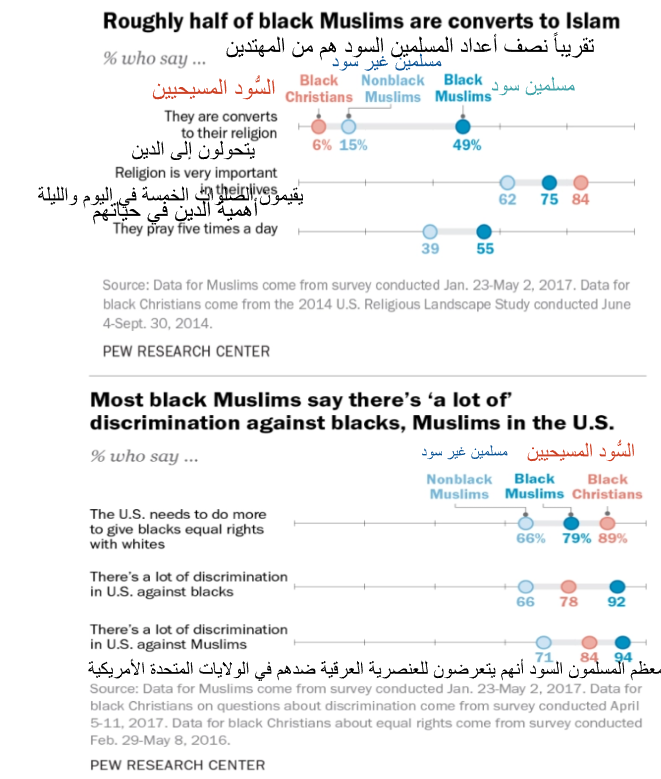
—> A fantasy image among some youth that new Muslim women are fair-skinned, blonde, and light-eyed—the worldly standard of beauty desired by a decaying world—unaware that the majority of converts are darker-skinned. Statistics show that more than 50% of Black Muslims in the United States are converts, yet they face the most racism in mosques, are underrepresented in Islamic boards, and are marginalized in many Western communities despite their commitment and sacrifice. Notably, a “white” person may consider any Muslim— even fair-skinned Eastern Europeans or Turks— as “colored.” Sadly, such racial prejudice also affects some Muslim youth seeking marriage. In reality, Black new Muslim women have fewer opportunities to find Muslim spouses than white new Muslim women.
This heart-disease was addressed by our noble Prophet (peace be upon him): “O people, your Lord is One. No Arab has superiority over a non-Arab, nor a non-Arab over an Arab; no red (white) over black, nor black over red—except by piety. The most honorable of you in the sight of Allah is the most pious.” It is best for a man to seek a woman compatible with him in culture, customs, and traditions, aligning with the Prophet’s saying: “A woman is married for four things: her wealth, her lineage, her beauty, and her religion. So attain the one of religion—may your hands be dusty (with success).”
—> It is very important for a new Muslim woman to learn her rights before, during, and after marriage:
— Before marriage: Choose an appropriate guardian (wali) to help find a suitable spouse. If she has a Muslim relative—even a distant one—he is her wali; if not: -
In Muslim countries: the ruler or judge is her wali.
-
In non-Muslim lands: the preponderant view is that the head of the local Islamic center (or a nearby one) serves as her wali. She should set conditions for the spouse she seeks and maintain continuous, Sharia-compliant communication with her wali to make a good choice. The wali must be trained to work with new Muslims—without exploiting compassion to propose to her himself, which embarrasses and makes her feel used.
— During marriage: The woman must know her rights and not be lax about the dowry or undervalue herself because she thinks he is trustworthy. Even if he is trustworthy and virtuous, she should not forgo her rights. She should meet him in person (not only online), get to know him, and ask all necessary questions. It is also advisable for both to meet with a family/marriage counselor to prepare them for life together and building a family.
— After marriage: Both spouses should continue communicating and finding common ground. If they differ, they should meet with a counselor to help overcome problems. Both should know their rights and base their relationship on affection and respect—and above all, fear of the Lord, Exalted and Glorious.
After reviewing the community’s responsibilities toward the new Muslim, the important question arises: What are the duties of the new Muslim?
Fifth: Duties of the New Muslim
1 -
Pronouncing the two testimonies of faith, acknowledging and believing in their meaning, understanding tawheed comprehensively, and acting upon it by frequently saying “La ilaha illa Allah.”
2 -
Supplication (du‘a): The Prophet’s guidance in supplication is the most complete and excellent. A hallmark of this guidance is concise, comprehensive prayers, which are most beneficial and befitting of asking the Most Generous. ‘A’ishah (may Allah be pleased with her) said: “He loved comprehensive supplications and left aside anything else.” Among the comprehensive supplications the Prophet (peace be upon him) taught every new Muslim—whose heart is pure and tender—is the du‘a reported by Muslim from Tariq ibn Ashyam: When a man would embrace Islam, the Prophet taught him prayer and then instructed him to say: “O Allah, forgive me, have mercy on me, guide me, grant me well-being, and provide for me.” In another narration: “For these gather for you your worldly life and your Hereafter.”
— And to frequently ask Allah the Exalted for steadfastness and success—for hearts are between two fingers of the Most Merciful; He turns them as He wills. Let the new Muslim ask their Lord to keep them firm upon this religion.
3 -
Ghusl (ritual bath): The evidence is that when Thumamah ibn Uthal embraced Islam, the Prophet (peace be upon him) instructed him to bathe.
4 -
Changing one’s name or clothing if something conflicts with Sharia: Shaykh ‘Abdul ‘Aziz ibn Baz (may Allah have mercy on him) said: There is nothing in the legal evidences that requires a person whom Allah has guided to Islam to change their name—unless there is a Sharia reason to do so. As for outward appearance, some changes are required (such as aspects of the natural disposition), and in clothing—its type, lawfulness, and etiquette. At times, however, it may be in one’s best interest not to change anything immediately, as this might deter others from Islam. Some may refuse Islam because they do not wish to change what they are accustomed to.
5 - Frequently praising and thanking Allah Most High for guiding them to the true religion and facilitating their acceptance of it.
6 - Being diligent in seeking the essential sacred knowledge without which belief and worship are invalid. Seeking such knowledge is obligatory upon every morally responsible person and should not be neglected for anything. At minimum, one should read some reliable books translated into their language.
7 - Calling to Allah: The new Muslim should strive to convey this goodness to those near them—spouse, children, relatives, and neighbors—through good words, kind admonition, and debating in the best manner, with sincere care and compassion.
8 - Staying with the community: Maintain ties with local Islamic centers—especially in non-Muslim lands—and obtain their schedule of activities, lessons, and lectures.
9 - Sincerity in Islam: Do not intend by entering Islam any worldly gain or pleasure, nor seek money; intend only Allah and salvation in the Hereafter.
Finally, we ask Allah Almighty for steadfastness in this world and the Hereafter, and we ask Him for a good ending.

 English
 اللُّغَةُ العَرَبِيَّة